
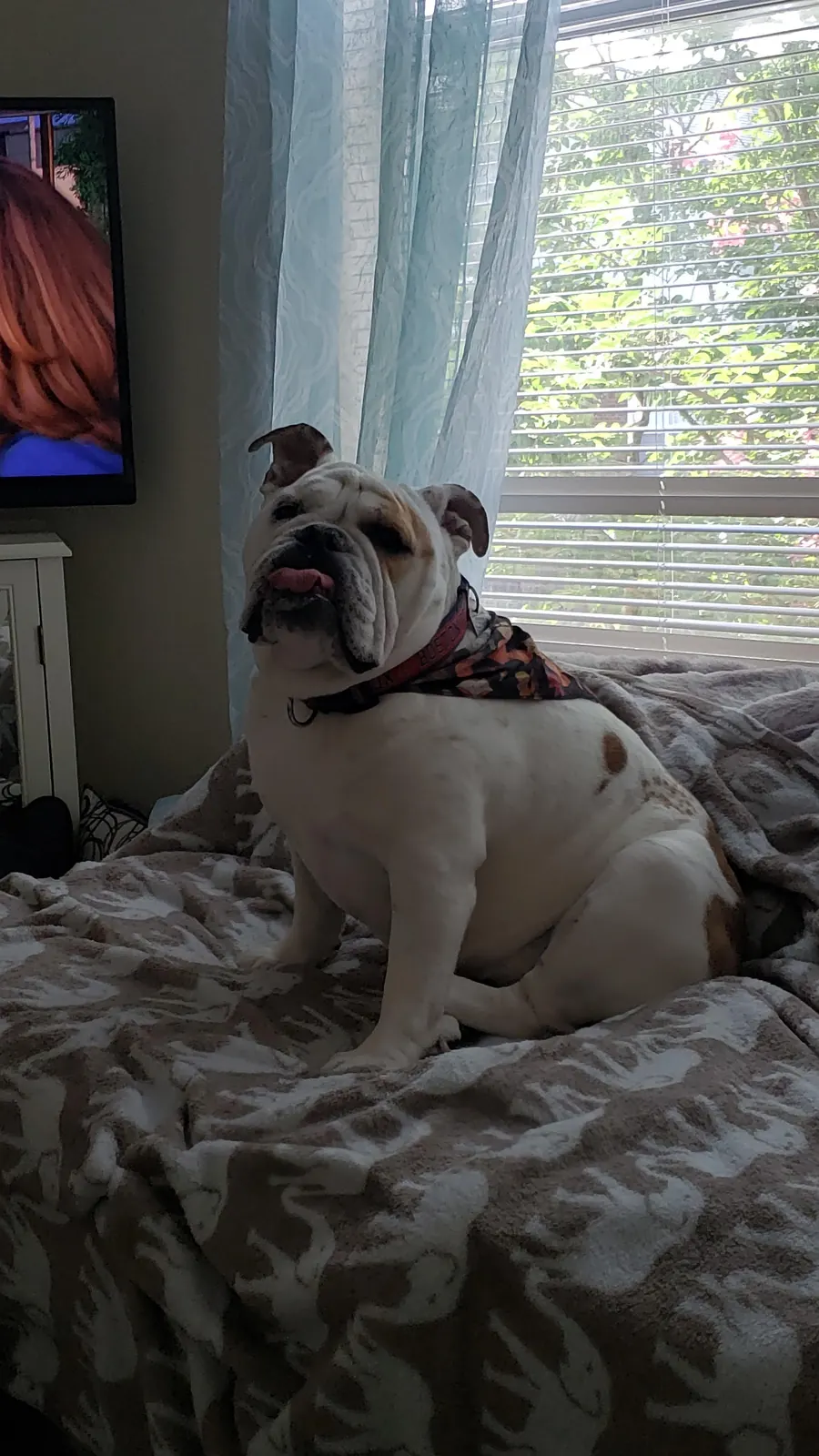
Your dog may love sleeping beside you, but getting onto and off a tall bed is not always as easy as it looks. Puppies, small breeds, senior dogs, and dogs with limited mobility may need a safer, more predictable route than jumping.
Dog bed stairs are usually best for mobile, confident dogs that already climb household steps comfortably. A dog ramp may be better for a dog that hesitates on stairs, has short legs, moves cautiously, or needs a continuous walking surface.
The right choice depends on how your dog moves, the height of your bed, the space available in your room, and whether your dog will actually use the equipment. Here is how to compare dog bed stairs and ramps without turning bedtime into an obstacle course.

Choose dog bed stairs if your dog:
Choose a dog ramp if your dog:
Neither option is automatically safer for every dog. The best product is the one your dog can use slowly and consistently without slipping, scrambling, or jumping over part of it.
When deciding between stairs and a ramp, consider your dog’s size, confidence, mobility, and the space available beside the bed. The American Kennel Club’s guide to dog stairs and ramps also recommends checking the product’s width, height, strength, and slip resistance.
| Feature | Dog bed stairs | Dog ramp |
|---|---|---|
| Floor space | Usually compact | Requires more room |
| Learning curve | Familiar to many dogs | May require more training |
| Best suited for | Confident, mobile dogs | Cautious dogs or dogs with limited mobility |
| Most important measurement | Step height and depth | Ramp length and incline |
| Portability | Foam models are often lightweight | Folding models can be portable but heavier |
| Cleaning | Washable covers are common | Rubber surfaces are usually easy to wipe clean |
Dog bed stairs can be a practical choice when your dog already understands how to climb steps. They also work well when a full-length ramp would block a walkway or extend too far into the room.
Many models fit beside a nightstand and can be moved between the bed and sofa. Foam stairs are often lightweight, while framed models may provide more support for larger dogs.
Dog bed stairs may be a good fit for:
The number of steps is less important than the dimensions of each step. Broad, shallow steps are generally easier to navigate than narrow steps with a tall rise.
A five-step staircase is not necessarily gentler than a three-step model. Compare the height and depth of the individual steps before buying.
Traction is especially important for dogs that already have difficulty moving around the home. This VCA guide to creating a comfortable home for mobility-compromised dogs recommends stable ramps with good traction and nonslip surfaces on stairs.
A ramp creates a continuous path from the floor to the bed. This may be easier for dogs that have trouble lifting their paws, bending their legs, or coordinating several individual steps.
A dog ramp may be a better option for:
The main drawback is space. A ramp needs enough length to create a manageable incline. A short ramp placed against a tall bed may be so steep that a dog has to scramble upward or control a difficult descent.
If your room cannot accommodate a properly sized ramp, stable dog bed stairs may be safer than an overly steep ramp.
Your dog’s normal movement around the home offers useful clues. Watch your dog approach household stairs, curbs, the sofa, and the car.
A dog that confidently uses household stairs may adapt quickly to dog bed stairs. A dog that avoids steps may be more comfortable with a gradual ramp.
Pay special attention to the trip down. Some dogs climb comfortably but become nervous during the descent because they cannot see or control the landing as easily.
Small environmental changes can help senior pets move around more comfortably. The AAHA senior-pet care recommendations include ramps, stairs, nonslip flooring, supportive bedding, and mobility harnesses among the options owners can discuss with their veterinarian.
Weight limits matter, but weight should not be your only consideration. A product can technically support your dog while still being too narrow, steep, soft, or awkward to use.
Small dogs often need a low step rise. Deep, oversized steps can also be difficult if a dog has to stretch forward to reach the next level.
Large dogs need enough width to place their paws comfortably and maintain balance. Lightweight foam stairs may shift or compress under a heavier dog even when the listed weight limit appears sufficient.

Short legs can make tall steps difficult. Long-backed dogs may also benefit from equipment that supports controlled movement without large leaps or awkward twisting. A gradual ramp or stairs with a very low rise may be the more comfortable option.
Senior dogs vary considerably. Some continue using shallow steps confidently, while others prefer a ramp. Choose according to your dog’s current movement rather than age alone.
New limping, weakness, stiffness, or reluctance to move should be discussed with a veterinarian.
Many disappointing purchases happen because owners choose a product before measuring the bed.
Measure from the floor to the top of the mattress, including any topper. Then measure how much floor space is available beside the bed.
Compare those measurements with:
The top platform should meet the mattress as closely as possible. If the stairs stop several inches below the mattress, your dog may still need to jump across the remaining gap.
Never place pet stairs on boxes, loose platforms, or other furniture to make them taller. The improvised base may shift while your dog is using it.
Mobility changes are not always sudden or dramatic. UC Davis guidance for helping senior pets thrive encourages owners to notice gradual changes, such as hesitation before jumping or reduced willingness to move around the home.
Good dog bed stairs should feel stable before your dog places a paw on them. Look for:
Avoid stairs that wobble, slide across the floor, or collapse noticeably beneath your dog. Soft foam can be comfortable, but excessively soft foam may make balance more difficult.

A suitable dog ramp should provide a gradual, secure route to the bed. Look for:
A folding ramp can save space, but make sure its hinges lock securely. The ramp should not begin folding while your dog is using it.
Do not place the stairs beside the bed and assume your dog will immediately understand them. Start with short, positive training sessions.
Avoid pulling your dog by the collar or leash. Do not place your dog at the top and force them to find a way down.
A ramp is often easier to introduce while it is flat on the floor. Reward your dog for approaching and walking across the flat surface. Once that feels comfortable, introduce a slight incline.
Gradually increase the angle until the ramp can be positioned against the bed. Keep the ramp stable, practice in both directions, and lower the incline if your dog freezes or scrambles.
Some dogs dislike a ramp because it moves or sounds hollow beneath their paws. Improving its stability and traction may solve the problem.

The most expensive product is not necessarily the best one. Correct sizing, stability, traction, and your dog’s willingness to use it matter more than decorative features.
Dog stairs are often better for mobile dogs that already use steps confidently. Ramps can be better for dogs that need a continuous walking surface or have difficulty climbing stairs.
The top of the stairs should meet the top of the mattress as closely as possible. Measure from the floor to the mattress before selecting a product.
Choose stairs with a nonslip base and place them on a gripping mat if necessary. Test the stairs with firm hand pressure before allowing your dog to use them.
Descending requires different balance and depth perception. Practice going down separately, use rewards, and make sure the steps are wide, stable, and easy to see.
Yes, if the stairs are wide, stable, and rated comfortably above the dog’s weight. Avoid narrow or soft foam models that compress or shift under a heavier dog.
Choose dog bed stairs when your dog climbs steps confidently and you need a compact solution. Prioritize low, wide steps, firm construction, good traction, and a height that matches the mattress.
Choose a dog ramp when your dog needs a smoother path, avoids stairs, or would be more comfortable on a continuous surface. Make sure the ramp is long enough to create a gradual incline.
The best choice is not determined by age or size alone. Watch how your dog moves, measure the space carefully, and introduce the equipment gradually. The right stairs or ramp should make bedtime easier without creating a new challenge.
For more practical dog-owner guidance, explore Dog Notes. You can also learn about the Bark or Woof bandana subscription for your dog’s everyday style.